AI Personalization, Chatbots, and Event Apps in Dubai Events
- Mar 17
- 4 min read
Technology is transforming how people experience events, and artificial intelligence is playing a major role in that change. From smart chatbots to personalized event apps, AI-powered tools are helping organizers deliver smoother, more engaging experiences for visitors.
In modern events, artificial intelligence can appear in many forms. These include chatbots, virtual assistants, recommendation systems, and data analytics platforms that help personalize the attendee journey. Event apps also play an important role by bringing together schedules, maps, networking features, and real-time updates in one place.
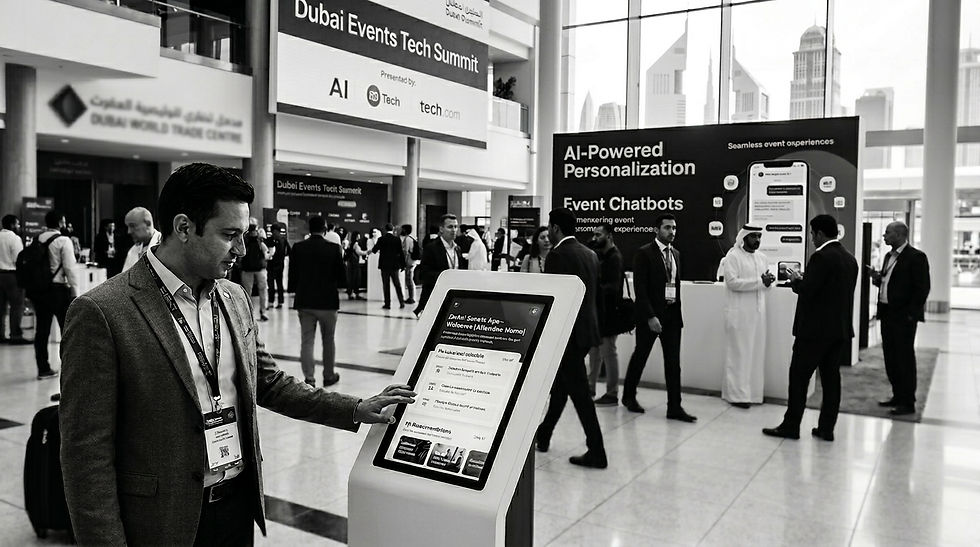
AI Assistants in Dubai Events
One of the most well-known examples of AI integration in events happened during Expo 2020 Dubai. The event introduced “Amal,” an AI-powered virtual assistant developed using technology from IBM.
Amal was designed to answer visitor questions around the clock. Guests could ask about pavilion locations, show timings, dining options, or transportation details, and the assistant would provide instant responses. The system supported multiple languages, making it easier for international visitors to navigate the massive venue.
The official Expo mobile app also used artificial intelligence and natural language processing to provide personalized recommendations for each visitor. Based on user interests, the app suggested exhibitions, performances, and attractions that matched their preferences.
Behind the scenes, Expo organizers also used AI-powered systems to manage operations. Technology consulting firm Accenture developed platforms that combined data from more than 80 sources to coordinate logistics and improve event management.
Event Apps for Conferences and Exhibitions
Beyond large global exhibitions, many conferences in Dubai now rely heavily on event apps to enhance attendee engagement.
For example, the Cardano Summit 2023 introduced a dedicated event application that included personalized agendas, AI-driven frequently asked questions, and live streaming for global audiences.
The conference attracted thousands of participants, including over 8,000 virtual attendees. Through the event app, users could explore session schedules, connect with other attendees, and receive instant notifications about upcoming talks or networking opportunities.
Many modern events in Dubai now offer similar features, including:
Interactive venue maps
Real-time schedule updates
Networking tools for attendees
Push notifications for announcements
Live streaming options for global audiences
Some venues have even started using chatbot systems through messaging platforms like WhatsApp or Telegram to answer visitor questions or provide safety instructions.
Benefits of AI and Event Apps
Artificial intelligence and event apps offer several advantages for both attendees and organizers.
For visitors, these tools simplify the event experience. Instead of searching through printed brochures, guests can easily find sessions, locate stages, and receive personalized recommendations directly through their smartphones.
During Expo, the AI assistant Amal handled thousands of visitor queries, allowing event staff to focus on more complex support tasks. This improved efficiency while ensuring guests received quick and accurate information.
Event apps also improve networking opportunities. At the Cardano Summit, for example, the app facilitated more than a thousand connections between participants through its digital networking features.
From the organizer’s perspective, event apps also provide valuable analytics. By analyzing app usage data, planners can understand which sessions are popular, how attendees move through the venue, and which areas attract the most engagement.
Challenges and Considerations
Despite their benefits, developing effective event apps and AI systems requires significant planning and investment.
A successful event app must be compatible with multiple devices and operating systems. It also needs stable servers capable of handling thousands of simultaneous users, especially during peak event hours.
Maintaining accurate content is another challenge. Event schedules often change quickly, and the app must be updated in real time to ensure visitors receive reliable information.
AI chatbots also require extensive training data. During Expo, the virtual assistant Amal was trained using thousands of interactions so it could respond naturally to a wide range of questions.
Privacy is another important concern. Event apps often collect personal data, including user preferences or location information within a venue. To address this, organizers typically follow strict data protection policies and provide users with options to control how their information is used.
Technical issues such as server outages or app bugs can also affect user trust, making thorough testing essential before launching the platform.
Technology Providers Behind Event Apps
Several global companies specialize in event technology solutions. Platforms such as Cvent, EventMobi, and Aventri provide ready-made tools for managing event apps, registrations, and attendee engagement.
For large projects, custom solutions are often developed by technology partners. During Expo 2020 Dubai, companies like Accenture and IBM played a major role in building AI-driven platforms and digital services.
Local event production companies in Dubai also contribute to app development and event technology integration, ensuring that digital tools meet the specific needs of each event.
Human Experiences with Event Technology
For many attendees, AI-powered tools simply feel like having a personal assistant.
One visitor at Expo shared that she asked Amal about the next live concert happening at the venue. Within seconds, the assistant provided the exact time and location. She described the interaction as “almost like messaging a helpful friend.”
Developers also see the impact of these technologies firsthand. One app developer involved in a major conference in Dubai explained that testing personalized schedules was particularly exciting. When attendees opened the app and saw sessions tailored to their interests, many were surprised at how accurately the system understood their preferences.
The success of events like the Cardano Summit, which attracted large global audiences through digital platforms and livestreams, demonstrates how technology can expand the reach of events far beyond physical venues.
The Future of AI in Dubai Events
As Dubai continues to position itself as a global hub for exhibitions and conferences, artificial intelligence and event apps will likely become even more advanced.
Future events may feature smarter recommendation systems, real-time crowd analytics, and even more immersive digital experiences that connect both in-person and virtual audiences.
By combining innovation with world-class infrastructure, Dubai continues to lead the way in shaping the future of technology-driven events.


